

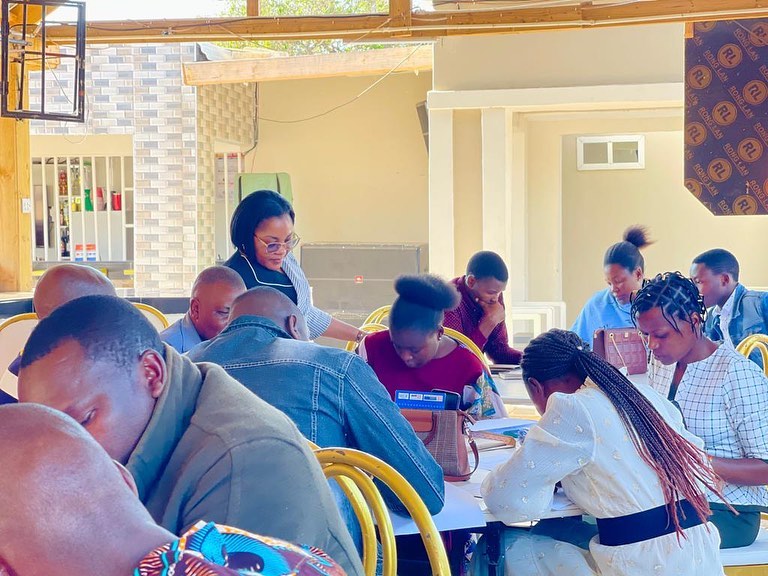
The ASUTA team Katavi recently conducted a comprehensive follow-up meeting and feedback session to assess the progress of the work plan implementation with Local Government Authorities (LGAs).
Collaboration is key to our success. By engaging with local authorities and gathering feedback, we can adapt our strategies to better serve the community and improve health outcomes for all.
Menala Anthony, Social and Behavior Change Communication Program Officer
This meeting, organized as part of the USAID AFYA YANGU - RMNCAH project, served a crucial role in reviewing and evaluating the outcomes of the community scorecard initiative. The primary objective was to ensure that the goals of the project are being met and to identify areas for improvement. During the session, ASUTA team members facilitated discussions designed to gather valuable feedback from the LGAs regarding the implementation of the work plan. The focus was on evaluating the effectiveness of the strategies and interventions outlined in the project. Participants were encouraged to share their experiences, challenges, and successes related to the community scorecard initiative. This open dialogue provided a rich source of insights, allowing the team to identify strengths and weaknesses in the current approach.

Collaborative efforts with LGAs, paving the way for sustainable improvements
The feedback gathered will play a crucial role in shaping future actions, ensuring that the project remains responsive to the needs of the community. By actively engaging with LGAs, ASUTA aims to foster collaboration, strengthen partnerships, and enhance the overall impact of the USAID AFYA YANGU - RMNCAH project. The follow-up meeting served as a platform for participants to identify challenges, share best practices, and work collectively towards sustainable improvements in reproductive, maternal, newborn, child, and adolescent health. This collaborative approach not only empowers local authorities but also builds a sense of ownership and accountability within the community.

Reproductive, maternal, newborn, child, and adolescent health
ASUTA remains committed to the project’s objectives and places a high value on the input and collaboration of all stakeholders involved. The organization recognizes that successful implementation of health initiatives requires continuous feedback and adaptation. Through such feedback sessions, ASUTA strives to enhance the quality of healthcare services and contribute to the overall well-being of the communities it serves. This commitment to ongoing dialogue and partnership is essential for driving meaningful change and achieving long-term health outcomes.
Leave a Reply